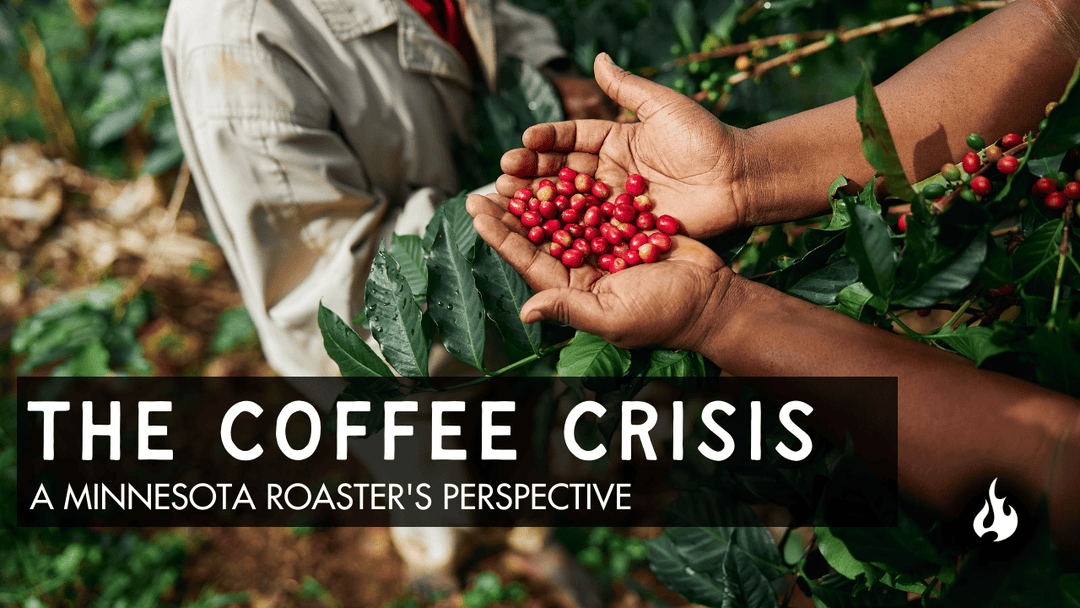

Fairtrade Overhaul and Real Coffee Transparency
As a small‑batch roaster, I read this Fairtrade standards overhaul with a lot of skepticism. I’m glad people care about paying farmers better, but I’m not convinced a new rulebook in 2027 actually fixes the core problem: how much money ends up in the grower’s pocket versus how much stays with exporters, certifiers, and retailers.

As a small‑batch roaster, I read this Fairtrade standards overhaul with a lot of skepticism. I’m glad people care about paying farmers better, but I’m not convinced a new rulebook in 2027 actually fixes the core problem: how much money ends up in the grower’s pocket versus how much stays with exporters, certifiers, and retailers.
The numbers already tell a worrying story
Fairtrade’s own recent coffee snapshot says that in 2023 there were about 795,000 smallholder coffee producers in the system, producing around 578,000 metric tons of Fairtrade coffee, and more than half of that was also certified organic.
But only a fraction of that coffee is actually sold on Fairtrade terms. Fairtrade’s “Impact at a Glance” sheet shows co‑ops sold, on average, just 35% of their coffee with the Fairtrade minimum price and premium attached, earning €82.4 million in Fairtrade Premium in 2023.
So growers are doing the paperwork, following the rules, and often farming to organic standards, but roughly two‑thirds of that certified coffee still sells at regular market prices. Outside of marketing value for brands, that’s a terrible return on all the extra work.
Other analyses have highlighted the same thing: only about a third of “Fair Trade” coffee actually sells with the label, leaving a big surplus sold as conventional coffee.

Certification is expensive, and the poorest farmers get squeezed
A big piece that gets glossed over is who pays to be certified. Fairtrade and organic certification both come with audit fees, paperwork, staff time, and required changes on the farm. Several reviewers of Fair Trade coffee point out that certification costs can be high enough to exclude the poorest farmers from the system altogether.
Even Fairtrade itself warns that new EU organic rules are expected to substantially increase organic certification costs for producer groups, to the point that keeping organic certification compliant with EU rules may become “economically challenging.”
So when we talk about “FTO” (Fairtrade + Organic), we’re usually talking about farmers who are already organized and relatively better resourced. The truly small, isolated growers, the ones most at risk, often can’t afford to play this game.
Where does the extra money really go?
On paper, the Fairtrade minimum price for washed Arabica is now $1.80 per pound, plus a $0.40/lb organic differential and a $0.20/lb premium. That sounds good. But look at how that premium is actually used. Fairtrade’s own impact summary shows coffee co‑ops spending about:
- 33% of the premium on improving production
- 33% on business/organizational development
- 25% on direct financial benefits to farmers
- 5% on social projects
So only about a quarter of that premium shows up as direct cash in a farmer’s hand. The rest moves through co‑op decisions, staff, infrastructure, and projects.
At the same time, studies have found that most of the extra money consumers pay for Fair Trade coffee never reaches the farmer. One analysis of U.S. supermarket coffee found shoppers paying around $1.50 more per pound for Fair Trade–certified coffee, but much of that “ethical” markup stayed with retailers, brands, or certification systems.
Other writers put it even more bluntly: in the mainstream coffee supply chain, farmers often receive around 10% of the final retail price, even when the coffee carries feel‑good labels.
From my side of the roaster, that looks a lot like a marketing machine built on top of the same old price structure.

The burden keeps landing on producers, not buyers
Coffee isn’t the only crop dealing with this. In 2025, the Kenyan government told tea factories to suspend Rainforest Alliance certification because the costs were too heavy for smallholders. Western buyers demanded the label but weren’t willing to pay enough to cover the extra expense, and only about one in five tea workers there earned enough to cover basic family needs.
Different logo, same basic pattern: costs and compliance at origin, emotional comfort and marketing value at destination.
When I see Fairtrade talking about new “evolved standards” across all crops, with more alignment to new regulations, I mostly see more checklists and compliance layers piling up on farmers and co‑ops. Meanwhile, Fairtrade openly admits that even after raising minimum prices, this still does not guarantee a living income for farmers, living income “reference prices” are voluntary, and not many buyers commit to them.
So if the math at the farm gate doesn’t change, a standards overhaul looks like a brand refresh, not a revolution.
Why we lean on direct trade and “functional organic”
As a small‑batch roaster, I don’t have the budget or the desire to play logo bingo. What I do have is the ability to keep the chain short and transparent.
Direct trade, when done honestly, means we buy directly from farmers or small co‑ops, talk to them about their actual costs, and agree on prices well above the commodity market when the quality is there. Multiple sources describe direct trade as cutting out intermediaries, building long‑term relationships, and often paying more than Fair Trade prices because you’re not feeding a big certification bureaucracy.
That doesn’t make direct trade magically perfect, there’s no official referee, and you have to trust the roaster. But if I can show a farmer contract, cupping scores, and actual price paid per pound at origin, that’s more meaningful to me than another logo on a bag.
On the farming side, we prefer “functional organic” over “paper organic.” We look for shade‑grown, low‑input, regenerative practices, compost, cover crops, minimal chemicals, even if the farmer can’t afford official organic certification. That’s especially important when even Fairtrade is saying organic certification costs are shooting up under new EU rules.
I’d rather pay a farmer a higher, transparent price for real practices than pay an in‑country broker and a European cert body to rubber‑stamp something the farmer is already doing.
So how do I see this Fairtrade overhaul?
To me, this big rewrite of Fairtrade standards looks like another turn of the marketing wheel:
- It will help big brands and retailers say, “Look, we’ve updated, everything’s even more sustainable now.”
- It will help Fairtrade as an organization stay aligned with new regulations and keep its label attractive to buyers and NGOs.
- But unless it radically increases the share of the final price that reaches farmers, and reduces the cut taken by middlemen, certifiers, and retailers, it won’t change the core problem.
So as a small roaster, my position is simple:
- I’m not anti‑Fairtrade or anti‑organic; I’m anti‑pretending that a new rulebook equals justice.
- I’ll keep focusing on direct‑trade style relationships, transparent prices, and functional organic practices.
- And until I see hard evidence that this overhaul actually puts more money into growers’ hands, I’ll treat it as what it mostly looks like from here: a convenient way to re‑launch FTO, pump up consumer confidence, and keep the same value split in place.

Bringing It Back to What Matters
At the end of the day, coffee is about people. It is about the farmers who grow it, the communities that depend on it, and the everyday rituals that give our lives rhythm and meaning. Labels and certifications can play a role in that story, but they are not the story itself. What matters most is whether the systems we build actually support the people who make coffee possible.
As a small roaster, I want to spend my energy on real relationships and real transparency. I want to know who grew the coffee, how they farmed it, and whether they were paid fairly for their work. I want every dollar we spend to move with intention, not through layers of paperwork that do little to change a farmer’s life.
Maybe Fairtrade’s overhaul will create meaningful progress, and I genuinely hope it does. But until we see clear evidence that more money is reaching growers, I will keep choosing the path that lets us look a farmer in the eye and know exactly what we paid and why. Direct trade, functional organic practices, and honest communication give us the chance to build something grounded in trust, not logos.
If you care about where your coffee comes from and who it supports, I invite you to join us in choosing connection over labels and transparency over convenience. Because better coffee starts with better relationships, and the most meaningful certifications do not come from a stamp. They come from people who choose to do right by one another.
And if you want to taste what that kind of sourcing feels like in the cup, come try our coffee. Every bag we roast is small batch, ethically driven, and rooted in the partnerships that matter most.