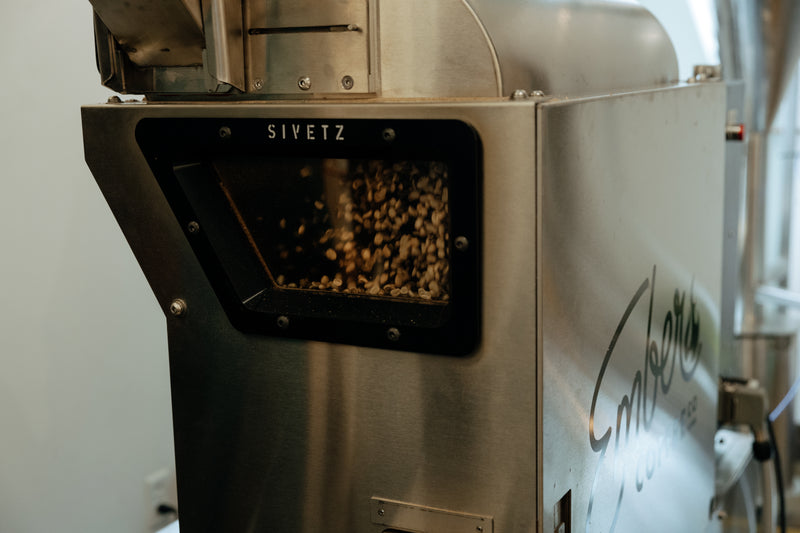
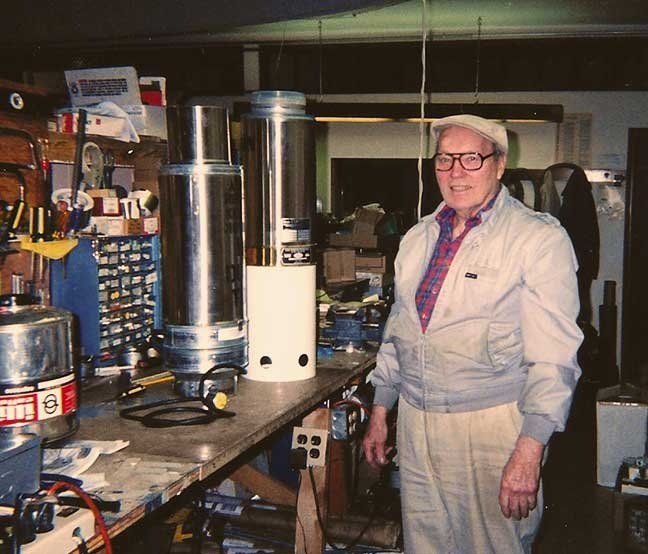
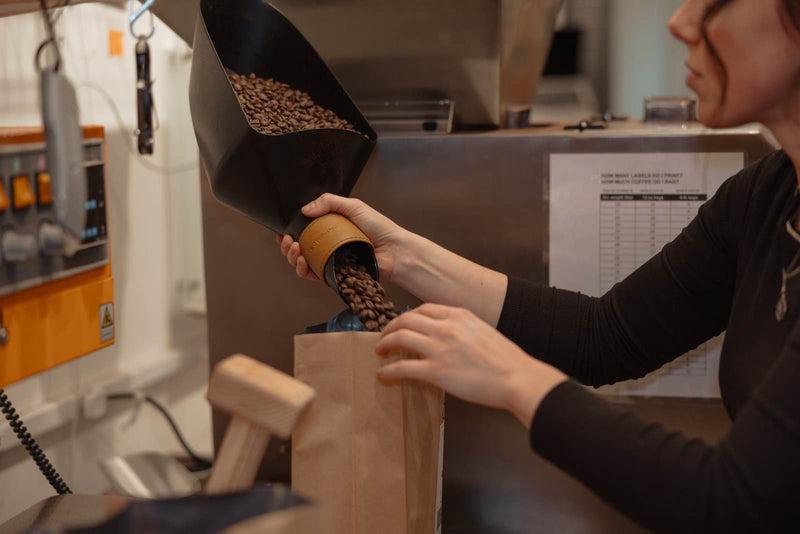
We don’t chase trends—we follow the science. Inspired by chemical engineer Michael Sivetz, we roast our coffee with air, not scorching metal.
Why? Because air preserves what matters: the bean’s origin, clarity, and complex flavor. It's not just roasting—it’s respect. This is where tradition meets thoughtful innovation, right here in Minnesota.
Peak flavor, Without the wait
Our air roasting method reaches full development in under 10 minutes. That means less exposure to degrading heat and more vibrant notes in your cup.
Shorter roast time means brighter acidity, more nuanced complexity, and zero baked or flat notes. It’s the difference between flavor that just exists and flavor that sings.
Every profile we dial in is tuned to respect the bean’s natural rhythm—not force it. Because when you roast with precision, you don’t have to choose between speed and soul. You get both.
Zero Bitterness. Ever.
With air roasting, the chaff—the bean’s outer layer—is lifted and removed before it burns.
That means no scorched flavors, no acrid aftertaste, and absolutely no bitterness. Just clean, honest coffee that loves your palate as much as your pour-over does.
Efficient by Design
We roast using a precision-controlled fluid bed system that blends electric and gas heat.
Why both? Because flavor demands flexibility. Electric provides clean, responsive heat—ideal for delicate stages like drying and Maillard development. Gas gives us power when we need it, without overcomplicating the roast curve. Together, they create an efficient, low-waste system that lets us hit the exact profile every time.
The impact? Lower emissions, zero unnecessary energy use, and none of the carbon-heavy footprint that older drum systems carry. It's a modern method designed for both flavor integrity and environmental accountability.
Science Over Scorch
Michael Sivetz didn’t just invent air roasting—he corrected what drum roasting got wrong. Uneven heat, burned chaff, smoky aftertaste? Gone. His method separates the chaff mid-roast, keeping bitterness out and purity in.
At Ember, we carry that science-forward legacy forward—preserving the coffee’s chemistry and its soul. This isn’t about nostalgia. It’s about better coffee, every time.
The Future Is Fluid
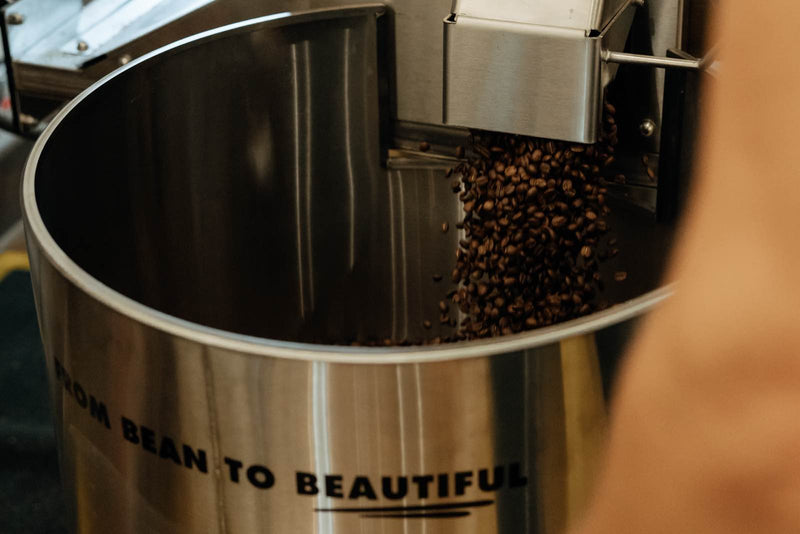
Fluid-bed roasting (also called air roasting) uses a bed of hot air to levitate and roast the coffee beans in motion. There are no metal drums or scorched surfaces—just superheated air flowing from below, creating a “fluid” state where the beans float and roast evenly. It’s like a hot-air popcorn popper, but built for precision, not snacks.
The benefits?
Faster, cleaner roasts
No contact burns or smoke taint
Chaff is lifted and removed mid-roast
The flavor stays true to the bean’s origin
This is the system Michael Sivetz pioneered—and the one Ember perfected in Minnesota.
Minnesota-Made. Globally Loved.
From our hometown in Minnesota, we carry Sivetz’s torch forward—roasting with clarity, character, and care. Every batch reflects our belief that great coffee starts with origin but ends with intention.
Elisa and I sat down for a minute and a half to catch you up on where we are and where we're headed. Elisa looks great in it. I look like a guy who spends most of his day standing next to a coffee roaster, which is fair.
If you caught our summer and September notes, this picks up where those left off. The short version is that a lot is moving at once: new drinks, new shelves, a new face at the roastery, and a couple of things we've been quietly building for the holidays. The video covers it fast, and the rest of this post fills in the details.
New Christmas drinks, and you get a vote
We're working on new drinks for Christmas, and this year we're not picking them on our own. Right now that means a lot of taste testing and some market research behind the counter. It's the best part of the job, and also the part where we drink far more coffee than anyone should.
Next comes the fun part. We'll narrow it down to a few finalists and put them up for a vote, and the one you pick makes the menu. We'd rather build a drink around what you actually want to order than guess and hope.
Keep an eye on your email for the poll. It takes about a minute, and whichever drink you pick gets a spot on the holiday menu. If you've ever wanted a say in what we pour, this is it.
On more grocery store shelves
Our beans are headed into quite a few grocery stores. For a small roastery in Big Lake, that's a big step, and we're excited about it. It's the same coffee we roast for you, air roasted in small batches, just a little easier to grab on a weekly shopping run.
Getting onto a shelf is mostly about trust. A store has to believe people will pick the bag up, and then pick it up again the next week. A lot of that trust comes from you, the people who have been ordering from us, telling friends, and bringing us up when someone asks what coffee to buy.
If you spot us on a shelf, we'd love a photo. And if there's a store near you where you wish we were, tell us and tell them, because store managers listen to their regulars. Either way, nothing changes about how we roast: every bag still comes out of Big Lake.
New hands at the roastery
A new roastery technician is joining the team, and we're excited to have them. That gives us another set of trained hands on the roaster, which means more consistency batch to batch. It also frees up a little room to try new coffees and new profiles, which is the fun part of this job.
While we were at it, we gave the roaster some maintenance. A fluid bed roaster lives and dies by airflow and clean parts, since the beans roast on a column of hot air instead of against hot metal. It's the unglamorous work that keeps every bag tasting the way it should.
Roasting on air is a big part of why our coffee tastes the way it does. The beans never touch a hot surface, so there are no scorched spots or burnt edges, and the papery chaff that comes off each bean gets blown out of the roaster before it can char. Keeping that machine in top shape is how we keep that promise every single batch.
This month: Vietnam
October's Roaster's Choice is Vietnam Lam Dong, and it's a good one. Ninety-seven percent of the coffee that leaves Vietnam is robusta, the kind usually sold on price. This is the rest: arabica grown in the hills above Dalat, where very little of it ever reaches a shelf like ours.
The farms there average about a hectare, small enough for one family to walk in a morning. Most of them plant more than coffee, with persimmon and jackfruit between the rows. The fruit trees pay at different times of year than the coffee does, they hold the soil on the slopes, and they feed the family in the months between harvests.
When the coffee is picked, it goes down to the wet mill at Duc Trong. Every grower's delivery is washed together there and dried on patios and raised beds for five to seven days. On its own, no single one of these farms grows enough to interest an exporter. Together, they make a lot worth shipping across an ocean.
In the cup it's toasted almond and brown sugar, smooth and rounded, with nothing sharp about it. If you like a coffee that's easy to drink and doesn't fight you, this is the one this month. It's here for October only, while the lot lasts.
Next month: likely a Honduras
For November, we'll likely have a Honduras coming in. I'm still testing a few roast profiles before I land on one, so we'll see what it becomes. That testing is where a coffee either clicks or doesn't, and I'd rather take an extra week than send out something I'm only half happy with. When it's ready, you'll hear about it here and in your inbox first.
Stocking stuffers are coming
Our Discovery Boxes are being released just in time for holiday shopping. Each one is three 2 oz bags in a single box, so you, or someone on your list, can find a favorite before committing to a full bag. They're $18 each, which makes them an easy stocking stuffer.
The Blends box walks you across our lineup. Gunflint Trail is the darkest blend we roast, with dark chocolate, cardamom and a finish that lingers. 10,000 Lakes sits in the middle with rich chocolate and buttery caramel, and Bramble is the lightest, with blackberry, blueberry and caramel. Three mornings and you'll know where you land.
The Single Origin box is about place. It pairs two coffees we always keep on the shelf, Guatemala Acatenango with dark red cherries and bittersweet cocoa, and Colombia Huila with brown sugar, cherry and pecan, with a third bag the roastery team picks from whatever is in season. We roast all three the same way, so the differences you taste come from the farms. Keep an eye on your email for when they open. They're small enough for a stocking, and good enough to start a habit.
Thank you
The part that still gets us teary-eyed is that none of this happens without you all. New drinks, new shelves and new people at the roastery all come back to the same thing: you keep showing up. So, thank you, and we'll see you around.
Matt and Elisa
Our roaster left us
We had signed on, built a menu around their beans, and trained our team in Big Lake
on their espresso. Not long after, they were gone. We spent a few weeks calling around and
pulling shots with whatever we could get, apologizing at the counter to people who
had come in for a drink we could no longer make the same way.
Nobody at that company was cruel about it. We were an account number, and account
numbers get closed.
So when Fresh Cup ran a piece in August called
10
Things Your Wholesale Roaster Wants You To Know, But Is Afraid to Say, we read it
twice. Garrett Oden had surveyed thirty roasters, from six thousand pounds a year up to
five hundred thousand, and asked them what they wished their cafes understood. Most of
them answered anonymously.
Of course they did. The roaster and cafe relationship runs on goodwill, and it is
hard to tell someone who pays your invoices that the invoice is late. We would have
thought about it too.
We would rather say ours out loud, before you order anything.
The coffee was paid for months ago
We buy our green coffee through Cafe
Imports in Minneapolis, and our Colombia comes through
Samaria. Both are importers. We are not standing in a wet mill in Huila shaking hands
with a grower, and we are careful never to say that we are, because the paperwork
behind our coffee is an importer position sheet. We would rather you know that than
hear a nicer story.
We pay about six dollars a pound for green coffee, roughly three times the commodity
price, because we are buying a few bags at a time from lots we have tasted rather than
buying containers. That money leaves months before the coffee reaches our roastery in
Big Lake, and long before any of it reaches your shop.
By the time you place your order, that coffee has already been chosen, paid for,
and carried across an ocean. The invoice you see is the last step, not the first.
A dollar a pound is about a nickel a cup
One roaster in the Fresh Cup survey did the arithmetic that most of us have never
had the nerve to do in front of a partner. A one dollar per pound increase on wholesale
coffee works out to about five cents per drink.
Here is the same math with a pound of ours. A pound is 453 grams. A double shot
pulls about 20 grams, which gives you 22 drinks. A dollar more per pound costs you
four and a half cents on each one. Round a latte up by a dime and you have covered
the increase twice, and nobody standing at your counter will notice.
We say that gently, because the dime is not the hard part. The hard part is being
the person who changes the menu board.
Prices move, and you hear it from us
Green coffee is an agricultural product traded on a commodity market, so its price
moves whether anyone wants it to or not. In the same Fresh Cup survey, 52% of roasters
said they will raise prices in 2027, 45% said they will hold, and one said they will
come down.
We will not pretend we can sit outside that. What we can promise is how you find
out. You will hear about a price change from us, in advance, with the reason attached,
and never as a surprise line on an invoice you have already committed to.
Perhaps that sounds like a low bar. It was not cleared for us when we were the shop
on the other end of it.
Net 15, and the call we would rather get early
Our standard wholesale terms are Net 15. Distributors run on Net 30. If you would
rather pay by card at the time of the order we will set you up that way instead, which
carries a three percent card fee, and delivery is free on anything over $200 net.
Two of the roasters Fresh Cup surveyed put late invoices near the top of their list.
One of them put it plainly:
Pay your bills on time. We're not your bank. Financing is the most expensive part
of this.
Anonymous roaster, 150,000 lbs per year, Fresh Cup, August 2026
We are not going to put it that sharply, because we have been the shop that was
short in February and we remember exactly how that felt. So here is the version we
would rather you hear. If an invoice is going to be late, call us before it is late.
We can nearly always work something out in advance. After the fact it gets harder for
both of us.
Roast-to-order has a schedule behind it
We roast to order and ship the same week. Nothing sits in a warehouse waiting for
someone to want it, which is the reason your first bag tastes the way it does. It also
means we cannot make coffee appear on a Tuesday afternoon because the count came up
short on Monday.
Coffee needs to rest, too. Beans keep releasing gas for a few days after they come
off the roaster, and espresso pulled the morning after a roast behaves differently from
espresso pulled four days later. Coffee ordered on the day you run out arrives
technically fresh and practically awkward.
We have found that the shops who keep a spare week on the shelf almost never call
us in a panic. It is the cheapest insurance in the building, and it sits right there
next to the flour.
What we will and will not print on your bag
We can build a blend for your shop and put your name on the front of it. Twelve of
our partners already sell one. Brigitte's Cafe has a house blend with their logo on the
label and our coffee inside, and every bag someone carries out the door is their name
going home with a regular. The minimum on a custom label is 25 bags.
We carry certified organic coffees and Fair Trade Organic coffees, and we carry
coffees that hold neither certificate. 10,000 Lakes is certified organic. Our Ethiopia
Yirgacheffe is certified organic. Others are grown clean and carry no paperwork at all,
because certification costs money and we have not paid it on every lot we buy. So if a
seal matters on your menu, ask us about the specific coffee you want and we will tell
you plainly what that one holds. We would rather answer per coffee than wave a word
across the whole shelf.
We also will not tell you we buy direct from farmers, because we buy through
importers. Cafe Imports handles most of it and Samaria handles our Colombia. It is a
less romantic sentence, and it is the accurate one.
What we will do is put the farm, the region, the elevation and the variety on the
bag. Pick up one of ours and look at the front. The farm printed there is the farm the
coffee came from.
We test for
mold and mycotoxins as well. Coffee is a crop, and crops can pick up mold somewhere
between the farm and the bag. It is a flavor problem before it is anything else. We test
because we will not hand our own kids something we have not checked ourselves.
If you are thinking about roasting your own
Five roasters in the survey used their answer to talk cafes out of roasting. We are
not going to do that.
If you want to roast, roast. It is a good craft, and some of the best shops we know
roast their own coffee. What we would ask is that you look clearly at what you are
picking up, because sourcing green is a separate business from running a shop. It
arrives with agronomy, logistics, a commodity market you do not control, and a machine
that needs somebody standing in front of it on a Tuesday morning when you would rather
be on the floor with your team.
If you decide to go and do it, tell us. We will help you think it through. We would
rather lose an account cleanly than have someone leave us quietly.
What you are buying
The coffee is the easy part to describe. It is
air-roasted
on a fluid bed rather than a drum, which keeps it smooth and low in acid, and it has
been voted
Minnesota's best coffee four years running in the
Star
Tribune Minnesota's Best reader awards. We roast from more than fifteen origins and we
will build a blend around your menu.
The rest of it is a phone number that gets answered. Jeff coaches our partners on
growing the business side of their shop. Elisa trains counters on how to offer a second
drink without anybody feeling sold to. If you are dialing in a new espresso at seven in
the morning, you can text us, and one of us will pick up or start a video call and
watch you pull the shot.
Matt Taus at The Hen & The
Hog in Albertville moved to us from a national roaster.
Duluth's Best Bread up in
Duluth, Jill's Cafe in Richmond,
Brigitte's Cafe in St. Cloud and
Olde Main Eatery in
Elk River order every few weeks. Not one of them is an account number here.
You can see the rest of the shops pouring our coffee on our
Find Ember Near You page, and the
terms and ordering side lives on our
wholesale coffee page. Existing
partners reorder through the
wholesale portal.
If you would like to taste it first, we will send three coffees chosen for your shop.
We call before we ship, so that we send you the right ones.
The call is free, and so is the coffee.
It's Saturday morning. In two days we'll unlock the front door on a Monday, and for the first time ever there will be people on the other side of it.
That might not sound like much. One more day a week. We've kept Mondays dark since we opened, though, and every time somebody asked when that would change I gave the same answer. When we can do a Monday the way we do the rest of the week, we'll open on a Monday. We wrote about that decision here when we finally made it.
Monday clears the bar now. The coffee will be roasted on air in our own roastery, same as always. The pastries will be made from scratch that morning. The syrups will be the same ones we pour every other day. Nothing about the day gets thinned out to make it possible. If you want the hours and the address, they're on the shop page.
Why we waited
We've never been good at doing everything at once. Crawl, walk, run is about the speed we move, and some weeks that's generous. Adding a day before we could staff it properly would have meant a Monday that was a little worse than a Tuesday, and people notice. They always notice.
So we waited. We built the bones first.
For a long stretch, though, the reason I stared at that closed Monday was fear. There's a big coffee chain a couple of units down the same street from us. When we opened, I thought about them constantly. I did the math on what a dark Monday was handing them. I pictured the cars in their line that could have been in ours, and I let it sit with me longer than it deserved.
Their coffee comes out of a machine at the push of a button. That's a real service for a real need. If you've got four minutes before a meeting and you need something hot in your hand, that's where you should go, and I mean it. I wouldn't pick it for myself. Plenty of mornings call for exactly that, though, and there's a place for everything.
What changed is that we stopped keeping score. We've found that when you measure yourself against the shop down the street, you start making decisions about them instead of about your own counter. The better questions turned out to be smaller ones. Is this cup good? Did that person leave a little better than they came in?
We've answered those six days a week for years. Now we get to answer them on a seventh.
A word about Elisa, from me
Starting a small business is not for the faint of heart. I don't think anyone can understand the size of the sacrifice until they've signed for something themselves and watched what it asks of their family.
Elisa carried a lot of those years. She was here early and here late, and she absorbed most of the parts nobody saw.
This year she's been able to step back from the day to day, and watching that happen has been the most rewarding thing of the whole season for me. She reads again. She's deep into Jeeves and Wooster, and she'll read a line out loud and start laughing before she gets to the end of it. She putters around outside. Her garden at home is doing well this year.
I'd take a slower version of this business every time if that's what it costs to get her afternoons back.
The team
We're grateful for the people who run this place. They're the reason Monday is possible at all.
The calendar turns twice on us every year. Summer into the school year, school year into summer, and each turn takes some of our team with it. We said goodbye to a few people this season we'd have kept forever if life worked that way. We also brought in some good new faces, and they've picked things up faster than I expected.
One spot is still open. The roastery has grown to where we need another full-time roastery technician. If you know somebody who'd be good at it, send them to embercoffeejobs.com, or just tell us in the shop.
The light changed this week
There are a couple of days every year where it almost flips over, and I catch it every time. The sun goes golden, a little earthy, and that's fall.
It's a good coffee season. We have a strong run of Roaster's Choice lined up over the next few months, and since it rotates every month, it's worth keeping an eye on. The rest of the shelf is where it always is if you already know what you like, and if you're still deciding, we put together our honest answer to what we'd hand a first-timer.
We're also working on something for the holidays, and honestly I'm as pleased about the timing as I am about the thing itself. Every other year we've thrown the holidays together at the last minute, out of necessity rather than choice. This year we started early enough to think it through. That's the part that feels like health to me.
I won't spoil it. Watch our social media over the next few weeks and we'll start showing pieces. If you're the one who has to win a Secret Santa or a white elephant this December, we've got you.
There are a few other things on the horizon too, about where Ember shows up and who gets to find us. We're not ready to talk about those yet.
Thank you
None of this works without you.
You're the people who came on a Tuesday because Monday was closed. You buy the bag, you bring a friend in, you ask how the roastery is going and then actually listen to the answer. You're how this got built.
There's no ask today. On Monday the door opens, and we'll be on the other side of it, glad you're still here.
Matt and Elisa
Big Lake, Minnesota
Air-Roasted Coffee: Smoother by Design | Ember Coffee