
Fluid Bed Roasting: Why We Have Never Used a Drum
In June, Sivetz named us their Roaster of the Month. They build the machine we roast on, they have been building fluid bed roasters longer than anyone in the business, and they pick one shop a month out of everybody running their equipment. This time it was a coffee company in a town of thirteen thousand people.

In June, Sivetz named us their Roaster of the Month. They build the machine we roast on, they have been building fluid bed roasters longer than anyone in the business, and they pick one shop a month out of everybody running their equipment. This time it was a coffee company in a town of thirteen thousand people.
We are not going to pretend that was a normal morning.
The part worth explaining is why we roast on air instead of on a hot drum, and why we have never done it any other way.
The problem every roaster is trying to solve
Michael Sivetz, who wrote the book much of the industry still cites, laid out the difficulty in about two sentences. Heat has to reach the bean quickly and evenly. Too hot and the beans scorch, not hot enough and they never really roast, and if the beans are not moving the whole time you get uneven color and a few burnt ones per batch.
A drum roaster answers that by tumbling beans against a heated metal wall, and it answers it well. Most of the coffee you have loved came off a drum, and there are drum roasters in this state doing better work than we do. There is a place for everything.
Fluid bed roasting answers it a different way. The beans never touch a hot surface. They are suspended in a column of hot air, floating and turning over each other, so every bean sees the same heat at the same moment and nothing rests against metal long enough to scorch.
What that tends to give you is a cleaner cup. Less of the roasty edge that covers up what the coffee tastes like, and more of the fruit and sweetness that was in the bean when it arrived. We say "tends to" on purpose, because plenty of drum roasters make clean, sweet coffee too. We have just found this way easier to be consistent on, and consistency is most of the job.
We started here, we did not arrive here
Worth saying plainly, because the Sivetz write-up reads like a conversion story and it was not one. We have never owned a drum roaster. Our first machine was a Coffee Crafters Artisan XE that we hand-upgraded into an XL configuration, with a Hermethius module handling roast control, and that machine is a fluid bed roaster too. Jason Scott and the Coffee Crafters team deserve real credit for it. It is where we learned to roast, on air, from the first batch we ever sold.
What moved us to the Sivetz was volume, not method. Eight to nine pound batches, one about every fifteen minutes, twenty to thirty hours a week of somebody standing at a machine watching it. That is a full job, and it was on its way to being more than one.
What the bigger machine changed
Same air, more of it. The roastery now runs larger batches with less labor in the same square footage. In practical terms, we pushed a building expansion we thought was a year out further down the road, and our roast-to-roast consistency got better.
The consistency is the part we care about. Capacity is a problem you can solve by buying something. Two bags of the same coffee tasting the same in March and in August is a problem you solve by changing how you work.
You can read more about how air roasting works if the mechanics are your kind of thing, or read Sivetz's write-up for their side of it.
The other thing sitting on our desk
In late July we also applied for Roast Magazine's Micro Roaster of the Year. Nine essay questions on mission, sourcing, sustainability, and staff, in a category covering every roaster in the country under 100,000 pounds a year.
We doubt we will get the nod. But the questions made us put a number or a name next to every claim we wanted to make, which is a useful thing to be forced into whether you win or lose. The answer we are proudest of is not about coffee at all. If you buy from us and cannot get it to taste right, our head of coffee will get on a call and fix it with you. Not an article. A person, adjusting your grinder while you stand at it.
That does not scale, which is exactly why most places stop doing it.
Who this belongs to
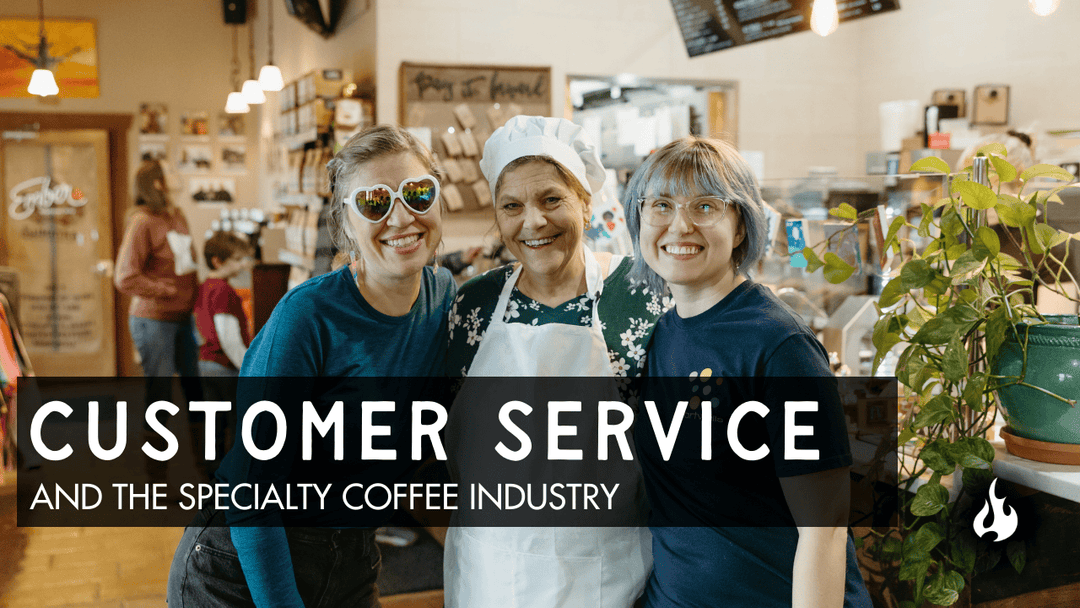
The recognition is the team's. Five golds in the 2026 Star Tribune Minnesota's Best, a machine that runs right because the people running it pay attention, and a wholesale bar full of shops who noticed before any magazine did.
Our names are on the sign. The coffee is theirs.
Taste what all of this is about.
Written by Matt Berry, co-founder, Ember Coffee Company, Big Lake, Minnesota.