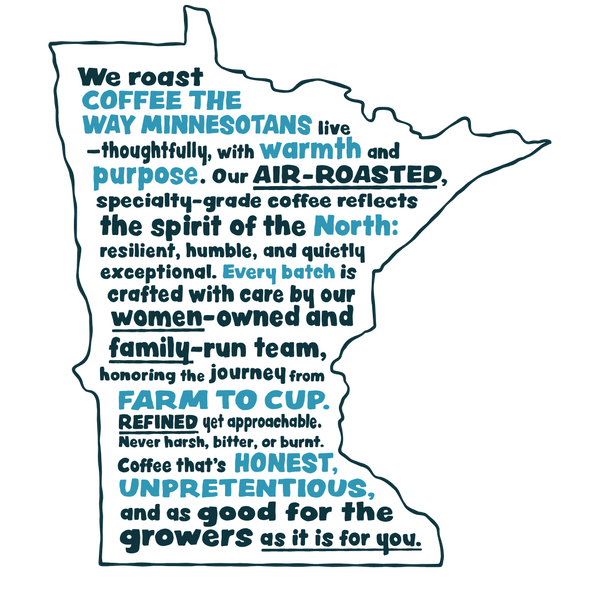

Together, we seek the world’s finest coffee—quietly exceptional, rooted in care. Not just found, but chosen with intention, every cup reflects a deeper kind of quality.
VIEW OFFER BELOW
Refer-a-Friend Sample Bag

"I bought this as part of a Facebook ads deal and OMG...I'm hooked. This is seriously the best coffee I've ever had AND their Minnesota local! I'm in love."

Christie M. VERIFIED BUYER


Coffee Keynote Descriptor

Try our award-winning coffee risk free

In Stock
Regular price
$8.00
Original price before discount
Your savings with this discount
/
Grind
Note: Sample will ship with a medium roast "crowd pleaser" blend. Limit 1 sample bag per customer.

✅ Why Coffee Lovers Are Switching to Ember:

  • Air-roasted for smooth, clean flavor-no burnt bitterness
  • Naturally low-acid, gentle on sensitive stomachs
  • Voted #1 Coffee in Minnesota two years in a row
  • The only coffee that beat Caribou and Dunn Brothers
  • Works for drip brewers, espresso machines, and pour-overs
  • Small batch roasted for maximum freshness and flavor
  • Free 4oz sample with no commitment-just cover shipping
  • Zero gimmicks. Just damn good coffee.
Product value 1
Roasted in Minnesota
Product value 2
Award Winning
Product value 3
Ethically Sourced

Frequently Asked Questions

Yep. Free. Like, actually free. You just cover shipping because we’re a coffee company, not Santa Claus. No subscription traps. No auto-billing nightmares. Just amazing coffee in your mailbox.

You’ll receive one of our best-selling products, freshly roasted for smooth flavor and low acidity. It's air-roasted, which basically means it’s the unicorn of beans. It’s customer-tested and award-winning. We'll do our best to match your roast preference, but not guaranteed.

Use whatever you’ve got. Ember plays nice with drip brewers, espresso machines, pour-overs, French presses, AeroPresses—even that one weird machine your cousin gave you. If it brews coffee, you're good.

We ship fast—like, faster-than-a-kid-after-coffee fast. Your order goes out in 1–2 biz days and you’ll get tracking so you can obsessively refresh your inbox like the rest of us.

Unless you’re drinking it on an empty stomach while sprinting a marathon… probably not. Ember is naturally low-acid, smooth as jazz, and roasted to be kind to your gut. No fire. No bitterness. No regrets. And while we’re not doctors, we’ve had literally hundreds of people call, email, DM, and shout from rooftops telling us Ember is the only coffee they can drink without getting heartburn, acid reflux, or stomach drama.

We want to earn your coffee loyalty the right way—by blowing your mind with how good our beans are. If we do our job, you’ll come back. And if not? You still got a killer cup of coffee for a few bucks shipping. We’re not some giant chain—and we’re not in the Twin Cities. Which means we rely on awesome humans like you to help us spread the word. If you love it, tell your friends. Post it. Text it. Shout it from your porch. You help us grow, we keep the great coffee flowing.

We knew this was coming. Yes, you’ll get the chance to order more—without selling your soul or signing up for a weird monthly mystery box. We’ll make it easy (and extra tasty) to re-up. And if you’re anything like most first-time sippers, you’ll want to lock it in. Grab a subscription and you’ll score 10% off everything, always. No hassle, no pressure—just better mornings on autopilot.

We're just outside the Twin Cities in Big Lake, Minnesota—just up Highway 10 on your way to St. Cloud (or the cabin). Come visit our flagship coffeeshop and roastery.

EMBER COFFEE

We didn’t set out to be the loudest voice in coffee. Just the most thoughtful. Ember grew from a simple belief: that great coffee should feel personal:

  • specialty-grade, air roasted
  • never bitter, never burnt
  • low acid, gentle on the stomach
  • refined, yet approachable
  • quietly exceptional

What started in a small Minnesota town became a beloved ritual across the North. Through fresh roasting, honest sourcing, and a whole lot of heart, we’ve built something people come back to—again and again.

Voted Best Coffee in Minnesota (2023-2025)
EMBER COFFEE
Over 5,000+ Reviews

Real Stories.
Real Sips.

For some, it’s the first coffee they could drink black. For others, it’s the surprise in their mailbox each month. Everyone has a story about how Ember fits into their day — and we’re honored to be part of it.

Here’s what real people are saying...
Miriam Luebke
Verified Buyer
I've been trying to wean myself off of cream in my coffee for weight loss but could not bear to drink black coffee because of the bitter taste. Thanks to the smooth, delicious flavor of Ember I can now enjoy a cup of BLACK coffee with no calories!
Taylor Johnson
Verified Buyer
I loved getting a mystery bag! The Peru roast I received is not one I would have chosen for myself but absolutely love it and will be in my rotation from here on out. It has great bold flavor without being bitter!
Jane K.
Verified Buyer
I loved getting a mystery bag! The Peru roast I received is not one I would have chosen for myself but absolutely love it and will be in my rotation from here on out. It has great bold flavor without being bitter!
Jo Haack
Verified Buyer
Caramel Bourbon is my favorite Ember coffee.
I love the rich flavor yet smooth and most importantly for me is NO heartburn or acid reflux which I'm prone to. This customer will never drink Folgers again.
Naomi Winkel
Verified Buyer
My daughter and I really like the smooth taste of this coffee. This is our first time trying this flavor. We will keep purchasing it in the future. We recommend it.
Margery G.
Verified Buyer
The young lion was very good although l would personally like something a bit stronger but not quite dark roast.
I do love that it is low acid!!
Kristen Kocsis
Verified Buyer
This is the best cold brew bean and coffee 1 have found! I followed the suggestion with a 1:4 (coffee: water) ratio. It was the perfect ratio and turned out great.

Air Roasted

Ember Coffee air-roasts every small batch using superheated air—never fire. This method was pioneered by Michael Sivetz in the 1960s. We're using science to improve your cup.

This means no burnt aftertaste, no harsh acidity, and no stomach pain. Just clean, balanced flavor that coffee lovers and sensitive stomachs agree on. The difference? You’ll notice it by your third sip.

Our Methods
Low Acid, Mold Free, Never Burnt or Bitter
COFFEE
Shop
K-CUPS
Shop
Micro Lots
Shop
Merch
Shop

Keep Learning

View all
Light Roast vs. Dark Roast: The Differences That Actually Matter
Ask ten people whether light or dark roast has more caffeine, and you'll probably get ten different answers, most of them wrong. The light vs dark roast debate is full of myths, and the actual science tells a more interesting story than the conventional wisdom. Here's what the research shows about how roast level affects your coffee, the caffeine content, the health compounds, the flavor, and what it means for your cup. The Caffeine Myth (Let's Get This Out of the Way) The myth: Dark roast has more caffeine because it tastes stronger. Or: light roast has more caffeine because roasting burns off caffeine.  The reality: Neither is quite right. Caffeine is remarkably stable during roasting. According to PMC research on thermostability, caffeine has a melting point of 238°C, higher than typical roasting temperatures. It doesn't "burn off" in any meaningful way. HPLC analysis published in PMC measured caffeine across roast levels: green unroasted coffee contained 166.72 mg/L, light roast had 196.35 mg/L, medium roast showed the highest at 203.63 mg/L, and dark roast contained 189.85 mg/L. The difference is minimal, and medium roast actually had the highest caffeine in this study. A 2024 study in Scientific Reports confirmed that dark roast contains slightly less caffeine under identical brewing conditions, but we're talking single-digit percentage differences. The measurement caveat: Here's where it gets nuanced. Dark roast beans lose moisture during roasting, becoming less dense. If you measure by weight (grams), light roast has slightly more caffeine. If you measure by volume (scoops), dark roast might have more because you're fitting more beans in the scoop. The difference either way is small enough to be practically irrelevant. What Actually Changes During Roasting While caffeine stays relatively stable, other compounds change dramatically. Chlorogenic Acids (Antioxidants) Chlorogenic acids (CGAs) are the primary antioxidant compounds in coffee, and they show a strong inverse relationship with roasting intensity. From the same HPLC-DAD study: Chlorogenic acid content decreases dramatically with roasting: green coffee contains 543.23 mg/L, light roast drops to 270.93 mg/L (50% loss), medium roast falls to 187.45 mg/L (65% loss), and dark roast plummets to 90.53 mg/L (83% loss from the original green coffee level). If maximizing antioxidant intake is your goal, lighter roasts deliver significantly more chlorogenic acids. N-Methylpyridinium (NMP) But here's where dark roast has an advantage. NMP is a compound that forms *during* roasting, it doesn't exist in green coffee. According to research in PubMed: N-Methylpyridinium (NMP) content increases with roasting intensity: dark roast contains 87 mg/L while medium roast has only 29 mg/L, meaning dark roast has roughly three times more NMP than medium roast. Dark roast contains roughly 3x more NMP. Why does this matter? NMP has been shown to: Inhibit stomach acid production Reduce expression of pro-inflammatory compounds Support metabolic function So while light roast preserves original antioxidants, dark roast creates new beneficial compounds. Melanoidins These are the brown pigments that form during the Maillard reaction, the same process that browns bread and sears meat. Research from the Journal of Agricultural and Food Chemistry found that melanoidin-bound phenolic acids increased to up to 29% of total phenolic compounds in dark roasts. Melanoidins contribute antioxidant activity through different mechanisms than chlorogenic acids. They account for 25-47% of antioxidant activity in darker roasts, partially compensating for CGA loss. Flavor Differences and Why They Happen This is where roast level makes the biggest practical difference for most coffee drinkers. Light Roast Characteristics Temperature range: 180-205°C (356-401°F) Roasted to: Before or at "first crack" Color: Light brown, no oil on surface Flavor profile: Bright acidity, fruit notes, floral aromatics, tea-like body. Origin characteristics (terroir) shine through. Why: Shorter roasting preserves more natural acids and aromatic compounds. The Maillard reaction is less advanced, so you taste what the bean brought with it rather than what roasting created. Medium Roast Characteristics Temperature range: 210-220°C (410-428°F) Roasted to: Between first and second crack Color: Medium brown, little to no oil Flavor profile: Balanced acidity and body. Some origin character remains alongside developing roast sweetness. Why: A middle ground, some original compounds preserved, some Maillard products developed. Dark Roast Characteristics Temperature range: 225-245°C (437-473°F) Roasted to: At or past "second crack" Color: Dark brown to nearly black, oily surface Flavor profile: Low acidity, smoky notes, chocolate, caramelized sugar, bold body. Roast character dominates. Why: Extended heat causes significant breakdown of acids and aromatic compounds. A 2025 study found that higher roast levels cut sugar content by nearly 50% and shifted aroma from fruity-floral to smoky-chocolate. The UC Davis Finding Research at UC Davis supported by the Coffee Science Foundation found that roast level drove the greatest flavor differences in the perception of filter coffee, more than origin or processing method. If you want to taste where a coffee came from, go lighter. If you want consistent roast character regardless of origin, go darker. Health Implications: It's Not Either/Or Both roast levels offer health benefits, just through different mechanisms. Light Roast Advantages Higher chlorogenic acid content, research from PubMed links CGA consumption to: Reduced cardiovascular risk Improved glucose metabolism Lower blood pressure and body weight Anti-inflammatory effects Higher overall antioxidant activity, PMC research found the highest antioxidant activities at lighter roast degrees. Dark Roast Advantages Higher N-methylpyridinium, with documented benefits for: Metabolic function and glucose utilization Reduced inflammation Weight management in pre-obese subjects Gentler on the stomach, dark roast is less effective at stimulating gastric acid secretion, making it better for people with sensitive stomachs or acid reflux. The bottom line: Neither is categorically "healthier." Light roasts preserve original beneficial compounds; dark roasts create new ones. Both provide the health benefits associated with regular coffee consumption. Which Roast Is Right for You? Choose Light Roast If You: Want maximum antioxidant (chlorogenic acid) content Enjoy bright, acidic, fruity flavors Want to taste origin characteristics Prefer pour-over or other clean brewing methods Are interested in single-origin exploration Choose Medium Roast If You: Want balanced flavor with some origin character Are new to specialty coffee Want versatility across brewing methods Prefer a middle ground on acidity Choose Dark Roast If You: Have a sensitive stomach or experience reflux Prefer bold, smoky, chocolatey flavors Want higher N-methylpyridinium content Prefer espresso-based drinks Like consistent flavor across different origins Brewing Considerations For caffeine extraction: Medium roast tends to peak. The beans have optimal porosity while retaining caffeine. For cold brew: Any roast works, but dark roast's smoothness shines in cold extraction. For pour-over: Light to medium roasts showcase nuanced flavors best. For espresso: Medium-dark to dark roasts provide the body and sweetness that balance well with milk. Frequently Asked Questions Does dark roast have more caffeine? No, this is a myth. Scientific analysis shows caffeine content is similar across roast levels, with medium roast slightly higher in some studies. The bold taste of dark roast creates an impression of "strength" that isn't related to caffeine content. Which roast is healthier? Both offer health benefits through different mechanisms. Light roast preserves more chlorogenic acids (antioxidants). Dark roast generates more N-methylpyridinium (anti-inflammatory, metabolic support). Neither is categorically healthier, it depends on which benefits matter most to you. Why does light roast taste sour sometimes? Light roasts have higher natural acidity (chlorogenic acids haven't broken down as much). If it tastes unpleasantly sour, it might be under-extracted, try finer grind, hotter water, or longer brew time. Well-prepared light roast should taste bright and fruity, not sour. Is dark roast "burnt" or lower quality? Not if it's roasted well. Dark roasting is a legitimate technique with specific benefits. However, some mass-market roasters over-roast low-quality beans to mask defects with char flavor. Quality dark roast should taste smoky and chocolatey, not burnt or ashy. Can I mix light and dark roast? Yes, though the results vary. Many blends combine roasts for complexity. But the flavors can clash if not balanced thoughtfully, it's usually better to choose one or the other. Where Ember Stands We roast across the spectrum because different coffees shine at different roast levels. Some origins are best as light roasts that showcase their terroir. Others develop beautiful chocolate and caramel notes with darker roasting. What we care about most is proper roasting, air-roasted for clean, even development without scorching or tipping. Whether you prefer bright and fruity or bold and smooth, the roasting should enhance the bean, not mask it. Shop our air-roasted coffees →
Read more
Cold Brew vs. Iced Coffee: What's the Difference?
Walk into any coffee shop in summer and you'll see both cold brew and iced coffee on the menu. They might look similar, dark liquid, ice, maybe some milk, but they're made completely differently and taste nothing alike. If you've ever wondered which one to order (or which one to make at home), here's the breakdown. The differences come down to extraction science, and understanding them helps you pick the one that fits your taste. The Fundamental Difference: How They're Made Let's start with the basics, because this is where everything else flows from. Cold brew is made by steeping coarse coffee grounds in cold or room-temperature water for 12-24 hours. No heat involved at any point. You strain out the grounds and you've got cold brew concentrate. Iced coffee is regular hot-brewed coffee that's been cooled down and poured over ice. Sometimes it's brewed double-strength to account for ice dilution, but the extraction happens with hot water,  just like your morning cup. That single variable, extraction temperature, changes everything about the final drink. What the Science Shows According to research published in PMC, cold brew exhibits "differential extraction marked by decreased acidity, lower concentration of browned compounds, and fewer total dissolved solids" compared to hot brew. Here's what that means in practice: Factor Cold Brew Iced Coffee (Hot Brewed) Extraction time 12-24 hours 2-5 minutes Water temperature Room temp or cold 90-96°C (195-205°F) Total dissolved solids 1.88-2.06% 1.96-2.23% Melanoidins (browned compounds) Lower Higher Interestingly, research from Scientific Reports found that caffeine and chlorogenic acid reach equilibrium between 6-7 hours of cold extraction, meaning the common recommendation of 12-24 hours may be more about convenience and flavor development than extraction efficiency. Acidity: Why Cold Brew Tastes Smoother This is the biggest practical difference most people notice. You might expect cold brew to have a dramatically different pH, but research from Scientific Reports found that's not quite true: Method pH Range Cold brew 4.96 - 5.13 Hot brew 4.85 - 5.10 So why does cold brew taste so much smoother? The answer is titratable acidity, the total amount of acid in the beverage, not just the hydrogen ion concentration that pH measures. Hot brew samples required significantly more sodium hydroxide to neutralize, meaning they contain higher total acid content. Cold brew has fewer total acids, which explains why it tastes less sharp even though the pH readings are similar. For people with sensitive stomachs or acid reflux, this distinction matters. Cold brew isn't just perceived as less acidic, it actually contains less total acid. Caffeine Content: A Surprising Finding You might have heard that cold brew has more caffeine. The truth is more nuanced. Research from PMC found: Method Caffeine Concentration Cold brew (coarse grind) 1,035-1,114 mg/L Hot brew 1,035-1,095 mg/L Cold brew with coarse grind actually showed slightly higher caffeine than hot brew. This happens because hot water extraction becomes diffusion-limited with larger particles, while cold brew's extended steeping time allows complete diffusion regardless of grind size. But here's the practical reality: cold brew is often served as a concentrate, then diluted. Iced coffee is typically served at drinking strength. Depending on dilution, you could end up with similar caffeine per serving, or cold brew could have significantly more if you drink it concentrated. Roast level matters too: Medium roast cold brew: ~1,205 mg/L caffeine Dark roast cold brew: ~1,035 mg/L caffeine Medium roasts retain more caffeine because darker roasting degrades some caffeine compounds. Flavor Differences: What You'll Actually Taste The extraction temperature affects which compounds end up in your cup. Research from PMC identified 94 volatile compounds in cold brew coffee, including furans, ketones, pyrazines, and various aromatics. But hot brewing extracts more of these volatile compounds overall. Cold Brew Characteristics Sweeter, more pronounced natural sugars Fuller body with smoother mouthfeel Chocolate, caramel, and molasses notes Lower perceived acidity More mellow overall Fewer volatile aromatics (less "coffee smell") Iced Coffee Characteristics Brighter, more pronounced acidity More aromatic complexity Fruity and floral notes come through Crisper, lighter body Tastes more like regular coffee, just cold Neither is objectively better, they're genuinely different drinks. If you love the bright, aromatic qualities of hot coffee and just want it cold, iced coffee is your answer. If you want something smoother, sweeter, and less acidic, cold brew wins. Health Considerations Antioxidants Here's something important from PMC/NIH research: Method Antioxidant Capacity Hot brew 13.60-13.99 mmol Trolox/L Cold brew 10.13-13.09 mmol Trolox/L Hot brew consistently shows higher antioxidant capacity. The researchers noted that "lower antioxidant capacity in cold brew coffees may decrease the chemoprotective benefits known to be associated with hot brew coffees." Interestingly, chlorogenic acid levels (a major coffee antioxidant) are similar between methods. This suggests hot brewing extracts additional bioactive compounds beyond chlorogenic acids. Digestive Comfort Cold brew's lower titratable acidity may cause less gastrointestinal irritation for some people. If regular coffee bothers your stomach, cold brew is worth trying. Shelf Life and Storage Cold brew has a significant advantage here. According to research from PMC, refrigerated cold brew showed: No bacterial growth over 42 days of storage Superior flavor stability compared to hot brew Higher sweetness retention Slower off-flavor development The primary limitation wasn't microbial, it was sensory. By day 42, all samples showed increased off-flavor scores. Practical guidance: Cold brew concentrate: 1-2 weeks refrigerated Diluted cold brew: 3-4 days refrigerated Iced coffee: Best consumed same day (degrades quickly) If you want to make coffee ahead for the week, cold brew is the clear choice. How to Make Both at Home Cold Brew What you need: Coarse ground coffee Cold or room temperature water A container (jar, pitcher, French press) Something to strain (fine mesh + paper filter, or French press screen) Method: Combine coffee and water at 1:8 ratio for concentrate (e.g., 100g coffee, 800g water) Stir to fully saturate grounds  Cover and refrigerate 12-24 hours (or 14 hours for optimal flavor based on research)  Strain through fine mesh, then paper filter for clarity  Dilute concentrate 1:1 with water or milk when serving  Which Ember coffees work best: Medium to dark roasts. The smooth extraction complements chocolatey, nutty profiles and softens any roast character. Iced Coffee What you need: Your usual brewing setup (drip, pour over, AeroPress) Ice Optionally: brew double-strength Method 1: Japanese-style (best quality)  Brew pour over directly onto ice (use half your water volume as ice in the carafe) The hot coffee flash-chills, preserving aromatics  Adjust brew ratio to account for ice dilution  Method 2: Simple Brew hot coffee at double strength Pour over a full glass of ice  Ice dilutes it to normal drinking strength  Which Ember coffees work best: Light to medium roasts. The hot extraction brings out bright, fruity, floral notes that shine over ice. Which Should You Choose? If you want... Choose... Smooth, sweet, low-acid Cold brew Bright, aromatic, crisp Iced coffee Make-ahead convenience Cold brew Fresher-tasting, same-day Iced coffee Maximum antioxidants Iced coffee Stomach-friendly option Cold brew Higher caffeine (potentially) Cold brew concentrate Frequently Asked Questions Is cold brew stronger than iced coffee? It depends. Cold brew concentrate has high caffeine, but it's usually diluted before drinking. Straight cold brew concentrate can have significantly more caffeine than iced coffee. Diluted cold brew may have similar caffeine to iced coffee. Why does cold brew cost more at coffee shops? Time and coffee usage. Cold brew steeps for 12-24 hours (vs. 3 minutes for iced coffee) and typically uses more coffee per serving. The batch production and storage also add costs. Can I heat up cold brew? Yes, but it won't taste like hot-brewed coffee. Cold brew heated up remains smooth and low-acid, it just becomes warm cold brew. Some people prefer this, especially if they want lower acidity in a hot drink. Does cold brew go bad? Eventually. Concentrate lasts 1-2 weeks refrigerated, diluted cold brew lasts 3-4 days. You'll notice staleness (flat taste, off-flavors) before it becomes unsafe. Which is better for sensitive stomachs? Cold brew, generally. The lower titratable acidity means less total acid in your cup. If regular coffee causes discomfort, cold brew is worth trying. The Bottom Line Cold brew and iced coffee aren't interchangeable , they're genuinely different drinks made from the same ingredient. Cold brew is smooth, sweet, and mellow. Iced coffee is bright, aromatic, and crisp. Neither is better; they serve different preferences. At Ember, our air-roasted beans work beautifully either way. The clean roasting profile means no burnt notes to muddy your cold brew, and the preserved origin characteristics shine in Japanese-style iced coffee. Try both and see which becomes your summer go-to. Shop our air-roasted coffees →
Read more
Mycotoxins in Coffee
Mycotoxins are toxic substances produced by certain types of mold and fungi. These molds can grow in warm and humid conditions, meaning they can potentially contaminate various foods, including coffee beans, as they journey from production to consumption. The World Health Organization (WHO) identifies cereals, nuts, spices, dried fruits, apples, dried chiles, and coffee beans as foods that might host these molds. It's important to note that the presence of mold does not automatically mean mycotoxins are present. Mycotoxins need specific conditions to grow, and there are many different types of mycotoxins, not all of which affect all food products. Common Mycotoxins in Coffee Among the various mycotoxins, Aflatoxins and Ochratoxin A (OTA) are the ones most commonly associated with coffee. Aflatoxins Aflatoxins tend to grow on grains, nuts, and spices. They are regulated in several parts of the world, and the US limits their presence in foodstuffs to 20 parts per billion (ppb). Interestingly, research has shown that coffee contains properties, like caffeine, which may help inhibit the damage caused by Aflatoxins, especially to the liver. This means that decaffeinated coffee might actually have a higher likelihood of containing Aflatoxins, but this is carefully monitored during the decaffeination process. Ochratoxin A (OTA) OTA is considered potentially harmful to kidneys and the immune system, and has been shown to be carcinogenic in rats and mice. In the European Union, regulations prohibit more than 3.0 micrograms per kilogram (µg/kg) of OTA in roasted coffee. While the US does not have federally regulated limits for OTA, the coffee industry maintains strict standards to ensure safety. Mycotoxins in Coffee: The Facts Emma Sage, Director of Education Resources at the Coffee Quality Institute, explains that "there is no way to tell if a coffee has been contaminated by OTA unless it is tested by a lab." Mycotoxins can form during coffee processing or storage if conditions are not ideal. However, extensive testing and quality controls in the coffee industry help mitigate these risks. Some brands market their coffee as "mold-free" or "mycotoxin-free" and may even conduct tests to back these claims. Without knowing a company's specific standards, it's challenging to assess the validity of these claims. In fact, such claims can sometimes be more about marketing than science. It's essential to be cautious about brands making bold claims without transparent testing results. Remember, if you consume grains, dried chiles, or dried fruits, you're already exposed to low levels of mycotoxins. How Much Is In My Coffee? The potential effects and amounts are, of course, related. Studies demonstrate that: Four cups of coffee per day contain only 2% of the ochratoxin. The Food and Agriculture Organization and the World Health Organization have deemed this exposure safe, but it is too low to be of practical significance. Modern processing methods used by specialty coffee growers effectively eliminate most molds and mycotoxins. Roasting kills molds that produce mycotoxins, reducing them by up to 96%. Decaffeinated coffee may contain a higher concentration of mycotoxins due to the absence of caffeine, a natural agent that inhibits mold growth. However, the measured levels remain too low to be of concern. In effect, 99% of specialty grade coffee is mold and mycotoxin free. The liver neutralizes mycotoxins, so they do not accumulate over time. Coffee contains compounds that may reduce the effect of aflatoxins. Our Rigorous Quality Process At Ember Coffee, we prioritize quality and safety above all else. Our rigorous process ensures that our green coffee beans are thoroughly vetted before they even reach our roastery. We work with trusted importers who maintain strict standards to ensure the beans are mold-free while in their warehouses. Additionally, we don't keep coffee on hand for long periods, ensuring it's always fresh and continually moving through our supply chain. Due to the lack of an industry standard, we've established our own rigorous set of standards to provide you with the best coffee possible. This includes: verifying regular testing with our importers sourcing only SCA-scored 82+ specialty beans closely monitoring our warehouse conditions inspecting every shipment for the presence of mold collaborating with other like-minded roasters across the globe constantly re-evaluating this process based on the latest research Strict adherence to our internal safety protocols ensure our coffee is not only delicious but also safe. Should You Be Worried? Worrying about mycotoxins in coffee is a personal choice. Different sources provide varying perspectives on their safety. Organizations representing the consumer coffee industry, such as the National Coffee Association, assure that mycotoxins in coffee are not a significant concern. We believe that paying an extra premium for coffee advertised as free of mold is a waste of money. According to Dr. Mark Corey, head of science and regulatory affairs for the National Coffee Association, “an average adult would need to consume up to 410,000 8 oz servings of brewed coffee per day to exceed safety levels established by scientific studies.” Conversely, some wellness-focused companies promote "mold-free" coffees, claiming higher safety standards. If this appeals to you, ensure the brand is transparent about its testing processes and results. Be wary of brands making broad claims without the data to back them up. The Bottom Line Mycotoxins can, in theory, be present in coffee. However, coffee sold in the United States rarely contains harmful levels of these toxins. A study conducted by researchers in Spain and published by the National Institute of Health (NIH) found that in people who drank four cups of coffee a day, mycotoxin levels were only at 2% of the maximum safe level. Even studies cited by those concerned with mycotoxins, such as Bulletproof's Dave Asprey, acknowledge that levels found in coffee are typically very low. Moreover, the coffee industry has been proactive in addressing mycotoxins since at least the 1990s, often opting for wet processing methods which remove most mold spores if they are present. As a consumer, there's little reason to worry about mycotoxins in your coffee. Enjoying a cup of high-quality, specialty grade coffee from a reputable source like Ember Coffee can put your mind at ease. Try Our Specialty Grade Coffee At Ember Coffee, we are committed to providing the highest quality coffee, roasted to perfection. Our specialty grade beans are carefully selected and processed to ensure you get a delicious and safe cup of coffee every time. In the end, it is a personal decision for every health-conscious coffee lover to pick beans, dose, and time coffee intake for maximum benefit. If you have questions, we are here to help! Shop our air-roasted coffees →
Read more